I'm still alive! I'll have a new bog post up soonish. In the meantime, go win a book:
I'm giving away a copy of A New Threat over on Goodreads. Go enter to win!
Monday, April 25, 2016


Monday, April 4, 2016
So I Finally Switched to Linux...

My first distro was Red Hat. I believe it was version 7.2 (I either bought the Red Hat Linux Bible, that came with a copy, and later got a boxed copy from Circuit City, or the other way around. I don't remember now.)
This was back in the days of dial-up internet. I'd already setup a home network for sharing files and printers. I installed Red Hat on an old computer, and configured it as a software router to share the dial-up connection with the rest of the network. I even had it set to automatically re-dial the connection if it dropped. (Yes, we had a second line just for the dial-up connection.)
That server lasted for several years until a combination of two things convinced me to replace it.
1. We finally had another option than dial-up internet available in our area.
2. I was studying for my Windows 2000 server exam, and wanted a Win2k network to learn on.
The old Red Hat box wouldn't run 2000 server, so I went down to Best Buy and got the cheapest computer they had (this was a few years after 2000 server came out, so it still met the specs.) When I went to check out, they asked me if I wanted the extended warranty. I'm thinking, hmm, the first thing I'm going to do when I get home is add RAM, a bigger hard drive, and install Win2k server... so, uh, no...
It came with Windows ME on it, so before I turned it into a server, I booted ME to play with for a while... to see if it was as bad as everyone said. It was worse. It crashed on me a few times, and I only had it running for a few hours. I powered it down, upgraded the hardware, and installed Windows 2000 server. Sometime around the same time (it might have been a few months prior...) the Red Hat machine was shutdown and replaced with a tiny little router. Ah, broadband.... *smile* (Well, it was a 1 to 2 mb connection, but it was exponentially faster than a 32k connection shared with three or four computers... Yes, 32k... it was supposed to be a 56k connection, but the line quality out in the middle of nowhere leaves something to be desired...) Sadly, the hardware for the Red Hat machine went to the junkyard.
That cheap e-machine was the best computer I've ever had. It ran 24/7 serving up files, a web development test server, and running what was possibly the smallest Active Directory network ever for over ten years, only getting a brief nap (let alone reboot) when the power went out (well, it was on a UPS, so the power had to stay out for a few minutes...)
Around the time the Red Hat machine was shutdown, Mandrake Linux had a really good reputation (Not to mention that Red Hat, now Fedora, switched from KDE to GNOME as it's primary desktop, and I can't stand GNOME, especially GNOME 3...), so I had that dual-booting with Windows 2000 on my desktop computer, but I just played with it a bit, it wasn't really my main computer.
The hard drive in the computer finally died, and when I put a new one in, I just loaded Windows on it. Still, I had Linux running in a VM just to play with.
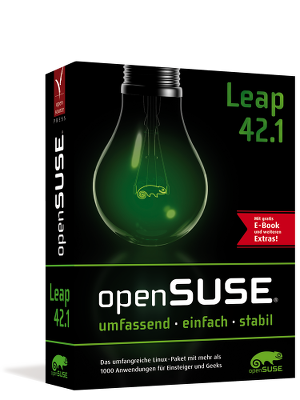
And that brings us to today. Microsoft has ended support for Windows XP. Windows 7 was a little wonky to use, but bearable. Vista was junk, Windows 8 was worse yet. Windows 10 is great compared to 8, but Windows 7 is still better. So, after reading Linux forums, and playing with SUSE 13.2 in a VM, it hit me. KDE, at this point, is better than even Windows 7. Most of the stuff I depend on these days is a web app, and Firefox has always run on every platform. Most of the current Linux tools had matured enough that they now work better than the ten-year-old Windows programs I was using for various tasks (hey, they work, and they work better, and/or are cheaper than modern Windows programs...) Gwenview, KDE's basic photo viewer, alone replaces and works better than three different programs I was using for quick-and-dirty photo cropping and resizing. Most of the modern programs I was using were open-source, anyways, and had been developed first for Linux (Sigil, Firefox, Calibre, GIMP, Inkscape, Filezilla...) And, WINE has matured enough that it now runs most of the Windows programs I need.
I'm still dual-booting Windows 10 and SUSE Leap 42.1, but now Linux is my main OS, and I only go to Windows for the occasional game or such.
So, how about you? Anyone running Linux, or tried it?
Saturday, April 2, 2016
Book Review: A Sea of Purple Ink

From the "back of the book:"
"Once their gifts made them heroes. Now they’re branded as traitors.
Reese Davis has been on the run for years. Her crimes include being born with a supernaturally quick mind, and doing everything within her power to protect the other outlaws from the paranoid king.
Every day is a fight to survive as Reese leads her small gang in a calculated game against the secret police, who are obsessed with finding and arresting anyone with special abilities. Her mission is to locate others with abilities, sneak them out from under the police’s noses, and spirit them away to safety. But dodging the police is difficult work even for a mastermind, and when a rescue turns into disaster, Reese stumbles upon evidence of a frightening conspiracy and learns that the king is no longer her worst enemy. In fact, he doesn’t seem to remember who he is.
Faced with what could be an elaborate trap, or worse, Reese must help the man who made her an outlaw survive the havoc he created, or risk the creation of an even more ruthless regime.
Blending alternative fantasy, dystopia, and superpowers, A Sea of Purple Ink is an intriguing, adventurous ride for ages 16 and up."
I don't normally like dystopias, but I do like superpowers, good writing, and fun characters. The story sucked me in, and I burned (pun intended) through this book in about three hours.
The story reminds me of Mistborn, in all the good ways. (There's mists, and people with different abilities living in a dystopia.) The characters abilities are different, and wording unique to the world is used for the abilities, giving the world an almost Steampunk feel. Which is a nice break from the medieval feel for most fantasy, or the future setting for most dystopias.
Over the course of the book we get to know Reese, her sometimes boyfriend, and the king pretty well. Sadly, we don't learn as much about the other characters. They still have plenty of depth, but from both the first-person perspective, and the fact that the story isn't about them don't let us get to know them as well. Niela, for example. She's Reese's friend, she's had trouble drinking and fighting, but we don't know much else about her.
My biggest problem with this book is that it doesn't have a sequel. I want to spend more time in this world, get to know the other characters, and find out what happens next.
I give this book four and a half stars, easy. It'd probably get bumped up to five if the author writes a sequel that's this good (I like to stay in worlds I like. In my opinion, it adds to the story world if there's more to it than one book.)

Thursday, February 18, 2016
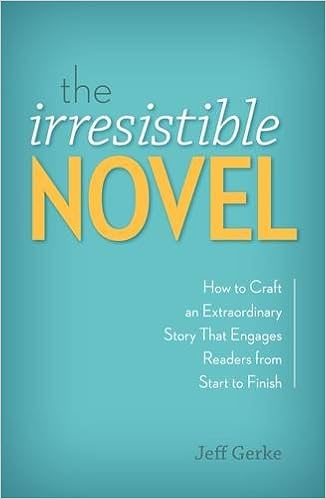
Win another free book!
Check out below for how you can win!
a Rafflecopter giveaway
Monday, January 25, 2016
Cover Reveal: Darkened Hope

Blurb:
Ayianna is a
cursed half-elf betrothed to Desmond, but her heart belongs to another. After
discovering the cure for the Sorceress's curse, she and her companions embark
on a dangerous quest to retrieve the ingredients.
When dragons
descend upon their party, Ayianna realizes the Sorceress is searching not just
for the corrupted dagger, but a human sacrifice that will open a portal to the
underworld. Battling deadly creatures and natural disasters, Ayianna is forced
more and more to confront her insecurities and conflicted heart.
Now she must
decide whether to be true to her family or true to herself. As the nations
rally for war, betrayal threatens to destroy them all, and it's a race against
time to return before the curse devastates the plains people.
Coming in May 2016
Author bio:
Writing
as J. L. Mbewe, Jennette is an author, artist, mother, wife, but not
always in that order. Born and raised in Minnesota, she now braves the heat of
Texas, but pines for the Northern Lights and the lakes of home every autumn.
She loves trying to capture the abstract and make it concrete. She is currently
living her second childhood with a wonderful husband and two precious children
who don’t seem to mind her eclectic collections of rocks, shells, and swords,
among other things. Here, between reality and dreams, you will find her busily
creating worlds inhabited by all sorts of fantasy creatures and characters, all
questing about and discovering true love amid lots of peril. She has two short
stories published in The Clockwork Dragon
anthology, and four short stories set in the world of Nälu. Her debut novel, Secrets Kept, was nominated for the 2014
Clive Staples Award, and its sequel, Darkened
Hope is coming May 2016.
Stay up-to-date with all things Nälu and her
journey as a writer mama at JLMbewe.com. Connect with
her on Facebook, Twitter, Instagram, and/or Pinterest.
Extras
Secrets Kept, the first
book in the Hidden Dagger Trilogy will be on sale for .99
The short story, A Princess No More, will be free.
Friday, January 22, 2016
Book Review: Forged Steel

From the "Back of the book:"
"Downtown. Coffee shop. 2 AM.
One minute, Josh is firing off sarcastic remarks at his best friend Marc – the next, they’re running from shape-shifters. Apparently, even best friends don’t share all their secrets.
Now Josh is in danger. He can see the monsters among the humans.
When Marc is kidnapped, Josh finds himself pulled into the schemes of the fae courts, and throws in his lot with Marc’s allies: the lovely Larae, a human named David, and the fighter, Eliaster. But what began as a rescue mission becomes something much more involved…
And all Josh wants to do is get out before it’s too late."
I haven't read much urban fantasy, but what I have read, I like. You get all the fun of 'traditional' fantasy, but none of the cliched settings, food, etc.
There's several fun things about this book. For one, instead of the usual Brittish/German fairy-world most fantasies draw from, the world of Forged Steel is influenced by Irish folklore. This mixes things up a little and adds a lot of flavor. Another thing is Josh's reactions. In most stories, the main character just up and joins in on the adventure. The main way authors like to mix this up is to have him not want to go at all. Josh's reaction is to freak out. Hey, no matter how cool you think you are, if you saw people using movie-style magic for real right in front of you, you'd freak out too. After that, he tries his best to do the right thing.
The other characters are well done too. Eliaster is the 'white-knight' type, but he's also secretive. Larae comes across as part love interest role, part sidekick, yet right from the start you get the feeling that something's not quite right about her, but you can't quite put a finger on what.
The plot is fun and engaging, Josh gets pulled in and has to help his friend/flee for his life. As stated above, I really like how this is done. Josh joining the fae to help Marc feels natural and not forced. He's neither too reluctant, nor too gung-ho about the situation. It's balanced just right so it sucks you in and immerses you in the story.
The only complaints I have are minor technical things. In one scene, Josh writes a computer program. No problem. He's a computer geek, and it's established he has experience doing this. My problem is two-fold. 1. He writes the computer program in a word processor. This is laughable. 2. He writes the program because they need to desperately get buried information off a hard drive. Okay, there are programs that do this.... and that's the problem. There are programs that do this. Any self-respecting geek keeps a USB full of handy utilities with them. There's no need to write a program from scratch when you can just go download one. Especially when you're in a hurry. And/or when the information is critical. You don't want to be finding and fixing bugs when the data you're working on is real and important. You use test data you don't care about for that.
But, it's a minor issue, and bugs me 'cause I've spent ten years in tech support. Most people won't notice it, and it doesn't break the story.
The other issue I have is that Josh learns to use a sword because it's fantasy, and swords are cool. I don't have a problem with that either. Swords are cool. The issue comes in because they have guns. A guy with a sword knocks a gun out of Josh's hand when Josh freezes and can't shoot him. I don't have experience here, but I've read that most people do freeze when facing the possibility of killing someone when they've never killed before. This scene is nicely done, and adds to the realism of the story. The problem is that another character tells him that guns are no good for close-range fighting and swords are loads better. That just isn't true. There's a reason that guns replaced swords.
Still, minor problems.
I really liked the book, and can't wait for the next installment. Four stars!

Bonus: Listen to some friends and I interview the author.
Tuesday, January 19, 2016
Book Review: Dragonfriend

From the "Back of the Book:"
"Stabbed. Burned by a dragon. Abandoned for the windrocs to pick over. The traitor Ra’aba tried to silence Hualiama forever. But he reckoned without the strength of a dragonet’s paw, and the courage of a girl who refused to die.
Only an extraordinary friendship will save Hualiama’s beloved kingdom of Fra’anior and restore the King to the Onyx Throne. Flicker, the valiant dragonet. Hualiama, a foundling, adopted into the royal family. The power of a friendship which paid the ultimate price.
This is the tale of Hualiama Dragonfriend, and a love which became legend."
Lia is a royal ward - the adopted daughter of the king. At the beginning of the book the traitor throws her out of a dirigible. She's saved by a dragonet, and it's the start of a beautiful friendship.
The plot is fairly standard for fantasy, but the focus is on the characters. Specifically, the relationships between Lia and her dragon friends. This was a really fun read that I completely enjoyed.
Secchia has created a rich world with a nice take on dragons here. The dragons aren't the traditional evil, nor the modern super-friendly, but instead have a complex society of their own. It was really fun spending time with them, and I'm looking forward to reading the next book in the series.
If there was one flaw, it was with the plotting. It does move a little slowly. I don't mind this, because the book is character driven, and most of the time is spent developing and exploring relationships. I love books like this when it's done right, and Dragonfriend does it very well. There are a few fight scenes to keep the political plot and mystery surrounding Lia going, but, if you're expecting action packed, it's not.
Four stars, easy. Possibly five if the next books in the series are just as good or better.
Thursday, January 14, 2016
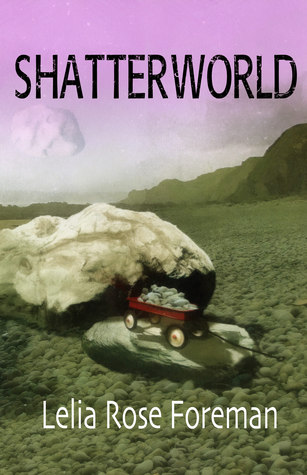
Book Review: Shatterwold
From the "Back of the book":
"Fleeing persecution and low on fuel, religious refugees from Old Earth find themselves stranded on a planet with a dark history. The promise of a future is shadowed by a dreadful past. Twelve-year-old Rejoice Holly is expected to someday become a farmer's wife, and set aside her dreams of astronomy. But the discovery that their Promised Land is already inhabited isn't helping her struggle between duty and dreams. Peace seems precarious, and the voice of reason is being silenced by one of fear.
As a new danger looms, the friendship or enmity forged could save or doom them all. Will the colonists and natives be able to set aside their differences for the sake of survival?"
So, basically we have here, "What if the Pilgrims happened in the future, and instead of coming to America, they went to a different planet?"
Most of the characters are the stereotypical Puritan types, follow the rules to the point of legalism, don't listen to the kids, do your job, etc. The main character, Rejoice, is a teen girl who wants to study astronomy. Most of the adults don't see how that would help the colony at all, so she's "encouraged" to pursue something "useful."
The neatest part of the book are the aliens. One of the challenges to the status quo of the colony is that the world is inhabited. Foreman did a great job with the aliens, they're actually alien. No "lets slap some putty on his nose and call him an alien" here (I get why Star Trek did it, but why do so many books? Sure, you can still have a compelling story that way, but it's nice to explore a world where imagination is let loose and you can actually explore the "what if's" of what alien life would look like.)
I don't want to spoil the ending, but Rejoice gets to use her passions for practical purposes, and everyone learns some lessons along the way.
This was a fun read, and I really enjoyed it. Four stars.
Tuesday, December 22, 2015
Star Wars: The Force Awakens - Spoiler Review

Note, this review does contain spoilers, so if you haven't seen it yet, leave now...
I'm going to try and organize this into stuff I didn't like, then stuff that I did like, but I may wander a bit.
THE BAD: (or meh, or confusing... not all of this is 'bad'...)
- I was expecting a sequel. What we got instead is a reboot of A New Hope, with a few sequel elements thrown in. I mean, we have Jakku, which is the same as Tatooine, an orphan living there who doesn't know anything about her parents, an ace rebel x-wing pilot, the Falcon getting tractored into a hanger, a death star (bigger, badder!), the heroes sneak around on the death star, a weak target on said death star that the x-wings have to take out before the rebel base is blown up, an x-wing trench run, a quirky droid that saves the day, a bad guy in a black mask with a deep voice, the list goes on an on. Not to say that this makes it a bad movie, it's done, for the most part, quite well. Most of it's just re-hashed. So, we got the plot of ANH, but none of the optimism. But people seem to like the dark these days... But that's a whole 'nother essay... (and, honestly, opinion, neither right nor wrong...)
- Speaking of that, Abrams can't seem to do subtle. In Star Trek, we got a redshirt who died, but instead of quietly dying in the line of duty, perhaps saving Kirk and making the character grow, it's shoved in our faces. He dies of his own stupidity, and it's shoved in our faces as though we wouldn't catch that it's a homage to a TOS redshirt if was done subtlety.
Same thing in TFA. I'm sure there's some references I'll catch on the second viewing that are more of an homage, but there's a LOT of 'shoved in your face, see, look, a Star Wars reference!' stuff, like the list in the point above.
- Lack of answers. All the questions you have going into this movie. Only one or two of them will be answered by the end.
The big one: EVERYONE wants to know "Where's Luke?" He was the main character in the first trilogy, the son of the main character of the prequels. He was (almost) everyone's favorite character as a kid. The main draw of watching TFA (at least for me, and I assume a lot of other people as well) is, "What happens to our favorite characters after ROTJ?"
For Han, Chewy, Leia, C3P0, R2D2 (kinda), and a few others, those questions are answered. Not so for Luke.
'Why isn't Luke in any of the trailers, or on the poster, or anything?' The answers is, because he's not in this movie. Well, I think he's got a total of a minute of screen time, and no dialog. I think he might be the Yoda type role in the next movie, but just because Yoda wasn't introduced until the second movie isn't a good reason not to have Luke in this one. On the other hand, including his story would've made the movie really long, so perhaps they're saving an entire movie for that?
Speaking of that, story-wise, why isn't Luke in the movie? The movie answer is that when Ben Solo turned to the dark side, Luke got so depressed that he went and hid. That's not really in Luke's character, from what we've seen of him in the first trilogy...
If you're wanting to know what happened between ROTJ and TFA, good luck. The movie only hints at a few little pieces of that. Want to know how Finn gets Luke's lightsaber that he's holding in the trailer? That's not addressed at all either. There's a half-dozen or so plot threads that aren't fleshed out. Some of them most likely will be completed in the next two movies. I've also heard the theory that some of them are left out on purpose to make you buy the books, games, comics, etc. that tie into the movie to get the whole story. (I haven't read Star Wars: Aftermath. I've heard it fills in some of the details.) If that's the case, that's good marketing, but bad story-telling.
- Where the heck did Luke's lightsaber come from?? The last time we saw it, in ESB, it was hurtling into the center of a gas giant. How did it get halfway across the galaxy? The movie answer: "That's a story for another time."
It really feels like it was put in just for nostalgia. I can't think of an in-story way or reason for it to be there, and apparently neither could the film-makers.
It's the little things like this that are insignificant on there own, yet pile up enough to draw you out of the movie.
- If you've read any of my book reviews, you know it's a pet-peeve of mine to split one plot across three different books/movies, and call them separate stories. They're not, it's one story in three parts. There's nothing wrong with telling a story this way, it's just that I don't like it. If you have three separate movies, each with their own plot arc, and a few (or a lot) of over-arching plot elements, you end the trilogy with four stories told, instead of one. I left the theater feeling like I'd seen part of a movie, instead of a whole movie. I will admit that this one is just my pet-peave, and I don't expect some people to be bothered by it at all.
- The way the Force works. So, Rey's force-sensitive, she's discovering her powers. Okay, cool. Wait... she just did a Jedi-mind trick, with no training? What??? She just defeated a partially-trained dark-side user... with no training???
In interviews, Abrams has (rightly) said he wants to ignore the midi-chorine crap. Good. He wants to treat it as if the Force is around everyone, if you tune into it, it's available to everyone. Good, that meshes more with the original movies.
I like that idea, but the implementation of it has all the finesse of a sledge-hammer.
In ESB, Luke has had some training with Obi-Wan. On the low end, a few hours, on the high end, a few weeks. All he's able to do is move a light-saber, heighten his instincts, and call out to his sister. Lucas has stated that Luke is the most powerful Jedi there ever was, or ever will be.
And yet, somehow, Rey is able to use the mind-trick, mentally keep out a dark-side user, over-power him telekineticly, and out lightsaber fight him... with absolutely zero training???
Come on. Even most other trained Jedi Masters couldn't do the mind trick as well as Obi-Wan, yet we're expected to believe that she can do it with no training at all....
To quote Han: "The Force doesn't work like that!"
The Middle:
- The villain. I'm not sure where to put Kylo Ren. There's good points and bad, kinda all tied together.
It's kinda like Disney said, "We need to have Darth Vader in the movie!" So, we got a Darth Vader clone. Yet, the way they did it is consistent with the story. It's Darth Vader's grandson, who the darkside has twisted him into idolizing.
It's also kinda neat that, though the EU is no longer cannon, they have borrowed some of the better ideas from it. (Kylo Ren is really Ben Solo, Han and Leia's son, who trained under his uncle Luke before he turned to evil.)
That's really neat that they've nodded to the EU, acknowledged that Luke is "passing on what he has learned," and whatnot. Yet, at the same time, it feels a little re-hashed. Is the Skywalker family doomed to repeat the same story over and over again in successive generations? And, if so, that's not necessarily a bad thing, as it reflects on real-life ("Those who do not learn from the mistakes of the past are doomed to repeat them.")
THE GOOD:
- I loved BB8. There's always the risk when introducing a cutesy kid-friendly character that you'll end up with another Jar-Jar. Not the case here. He was integral to the plot, funny, and well-acted (if a droid can be considered an actor...) Nothing was over-done with him (it?).
- Finn's character arc. There's some really good story telling done here with the character of Finn. His arc has a beginning, middle, and end, and still leaves room for him to play a big part in the sequels. The character's motivations for everything he does are there and plotted out, while not falling to cliche.
One of the problems I have with any evil-empire, be it fictional or in the real-world, is "Can't anyone see that what they're doing is evil? How can they think it's right?"
That's one of the reasons I love Finn so much. He's been born, bred, and conditioned to do his job, yet when they're killing innocent villagers, Finn can't do it. He wakes up emotionally, and realizes it's wrong. They could go cliche here, and have him go into full hero mode, but they don't. He does the right thing following his conscience, but he's still just trying to run away from the evil for a while.
He does seem to get attached to Rey really quickly, but I suppose they've been through a lot together, and she's the first other person he meets who tries to do the right thing...
- I love the character of Rey too, just not quite as much. The movie sets up a complex character here, who I'm sure we'll see more of her backstory later.
- Everything with Han and Chewy. I've got some little nitpicky things to say about most of the characters. Not so here. Everything is spot-on. To me, some of the other characters have to act slightly out of character to make the plot of the movie work. Not so with Han and Chewy. Han's reasons for leaving everyone are completely consistent with his character, the balance of snark, humor, and everything else we love about Han is here and perfect. Including when he dies. I would've like his last words to be, "I forgive you," or something, but just caressing his son's cheek and saying a thousand things with actions and not words (not to mention that the character hasn't ever been good at mushy stuff) is totally within the character, and works. (Yay! Abrams did one subtle thing right!)
- the "lived in" feel is back. A lot of people criticize the prequels for feeling new and shiny, and not at all like the gritty lived-in fell of the first trilogy. I don't think that's a valid criticism, as the gritty feel is symbolic of the decay that evil has brought to the galaxy.
That feel is back in TFA, and is appropriate, as one evil empire has fallen, only to have another rise in it's place. (The weariness of fighting evil for a lifetime shows in Leia's face, too.)
- I really get the felling that once the other two movies are out, the plot elements of TFA will mesh really well with them. Like I said earlier, there's a lot of plot stuff that's left dangling. To me, this is irritating to watch a movie and not get a complete arc, but the setup is there to have this be one of the most tightly integrated trilogies ever. I'm really expecting to like TFA a lot more once the next two movies are out and I'll be able to marathon all three of them.
Overall, I enjoyed the movie (and, as I said, I believe it will be better in context with it's sequels, and possibly some of the tie-in material) , but I didn't think it was perfect. Most of my issues have to do with nitpicking the plot. Fortunately , I like the characters more than the plot, and the characters really shine.
I do kinda want to read Aftermath, and some of the other tie-in material, then re-watch it. (but again, that other stuff should enhance the experience, not be required...)
Tuesday, December 15, 2015
Geek Feast Blog Hop

Today we're talking favorite geeky (or related) foods. Since this is the internet, I can't share with you, but you CAN visit all the sites in blog hop, pull up all the recipes, and make your own feast to eat along with us. That's kinda the same thing, right?
I feature a bunch of different foods in A New Threat, from sandwiches, chips, steak, veggies, and inordinate amounts of tea. Now, I like tea and all, but Nilre's the tea drinker, not me. If I tried to walk you through making proper tea, she'd laugh at me.

Now, most Meskka prefer their steak raw, as in, un-cooked. Most humans, though, like it with at least some browning to it.
If you like it rare, it's easy, slap it on the grill, wait a few seconds, flip, wait, eat.
Me, I like a good well-done steak. I know, most of you at this point are all, "Eww, dried out and nasty!"
Well, that's only if you're cooking it wrong.

Anyway, back to cooking a great, juicy, well-done steak. You see that picture over there to the right?
That's the wrong way. Completely wrong. If you're aiming for well done, and your fire looks like that, you're going to end up with shoe leather.
To start, light a smaller amount of coals. Once they're lit, close the lid, and watch the temperuature.
When it gets around 160F to 180F, (You do have a grill thermometer, right?) shove them all over to one side of the grill.
 Place the steaks on the other side of the grill.
I've got best results slathering them in barbecue sauce, that adds a little extra moisture, and flavor. You can also use a dry rub, or leave them plain, whatever you like best.
These are going to take a while to cook. The secret to a good well-done steak is low temperature, for a long time. About an hour, possible two, depending on how many steaks, the cut, the size, and what your exact grill temperature is.
Check the steaks about every fifteen minutes to a half hour (again, depending on the variables mentioned above) and make sure nothing's caught on fire. Also check your grill temp, and if you have one of those probe-type thermometers, check the internal temp of the meat (if you don't have one, go get one ;) )

Yes, cooking this way is more of an art form, but it's fun, and really yummy.
Don't forget your favorite beverage. I like Mountain Dew, but there are other options:

Visit the other sites in the blog hop:
Monday:
J. L. Mbewe
Laura VanArendonk Baugh
Josh Smith
Tuesday:
H. A. Titus
Aaron DeMott
Wednesday:
Christina Maloney
Janeen Ippolito
a Rafflecopter giveaway
Subscribe to:
Posts (Atom)